

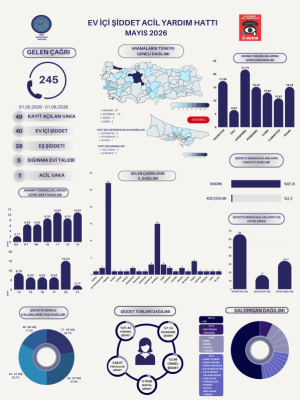
Ev İçi Şiddet Acil Yardım Hattı Mayıs 2026 Veri ve Analiz Raporu
Detail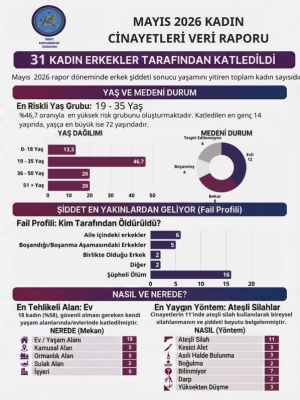
TÜRKİYE KADIN DERNEKLERİ FEDERASYONU MAYIS 2026 KADIN CİNAYETLERİ RAPORU
Detail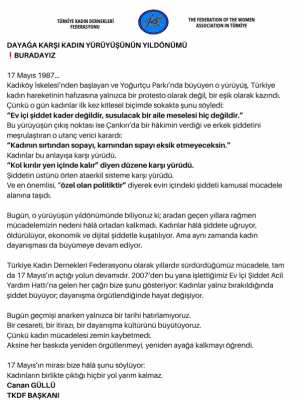
DAYAĞA KARŞI KADIN YÜRÜYÜŞÜNÜN YILDÖNÜMÜ ❗️BURADAYIZ
Detail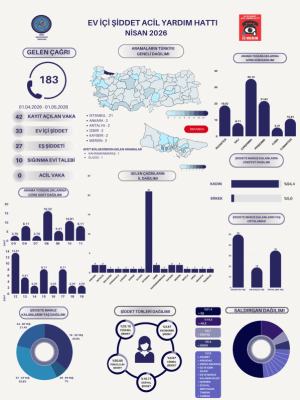
Domestic Violence Emergency Hotline April 2026 Data and Analysis Report
Detail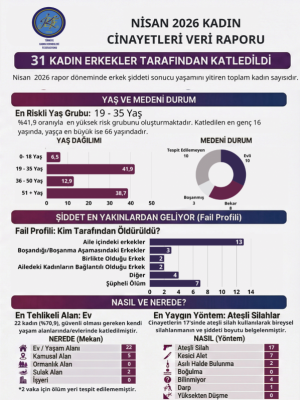
Femicide in Türkiye: April 2026 Femicide Report 1 April – 30 April 2026 Between 1 April and 30 April 2026, 31 women were killed by men. Of these deaths, 24 were recorded as femicides, while the deaths of 7 women were registered as suspicious. Marital Status Regarding the marital status of the women who were killed, 10 were married, 8 were single, and 3 were divorced. The marital status of 10 women could not be determined. Age Distribution In terms of age, the youngest woman killed was 16 years old, while the oldest was 66. Of the women killed, 6.5% were between the ages of 0–18, 41.9% were between 19–35, 12.9% were between 36–50, and 38.7% were aged 51 and over. The 19–35 age group represents the highest risk group, accounting for the majority of women killed. Perpetrator Profile An examination of the perpetrators shows that 13 women were killed by men within their family (husband, son, father, or brother). 3 women were killed by men from whom they were divorced or in the process of divorcing. 2 women were killed by men they were in a relationship with or living with, and 2 women were killed by men connected to women in their family. In 4 cases, other men were identified as perpetrators. The deaths of 7 women were recorded as suspicious. Methods of Killing When the methods of killing are analyzed, firearms emerge as the most commonly used method. Firearms were used in 17 cases. 7 women were killed with sharp objects, 1 woman was beaten to death, and 2 women were found hanged. The method of killing could not be determined in the cases of 4 women. Locations With regard to the locations where the killings took place, the majority of women were killed in their own homes. 22 women (70.9%) were killed in their homes, 5 in public spaces, and 2 in wetland areas. The location could not be determined in 2 cases. Assessment These figures demonstrate that femicides are not isolated incidents but the consequence of deep-rooted structural failures. The fact that women are most frequently killed in their own homes reveals how profoundly unequal and under-supervised domestic environments have become spaces of lethal risk for women. The targeting of women who are seeking separation or are in the process of divorce illustrates that women's right to life is directly threatened by the exercise of their own autonomy. The killing of women despite protection orders in place once again underscores the failure of protective and preventive mechanisms to be implemented effectively. What must be examined is whether risk assessments are conducted adequately, whether restraining and protection orders are enforced effectively, on what grounds decisions for non-custodial proceedings are made, and why inter-institutional coordination continues to fall short. The failure of judicial processes to adequately account for the severe psychological trauma experienced by survivors of sexual violence and abuse undermines the protective function of the justice system. Proceedings shaped by social pressure and speculation, rather than expert assessment, cause harm both to survivors and to society's broader sense of justice. Violence does not occur solely within the home; it manifests in schools, in public spaces, and across every layer of social relations. Inconsistent policy approaches within the education system, the weakening of psychosocial support mechanisms, and the insufficiency of counseling services all amplify existing risks. Language that normalizes violence, the delegitimization of teachers and public authorities, and a growing climate of aggression and lack of accountability among young people together pose a long-term threat to public safety. In conclusion, the April 2026 data once again demonstrate that patriarchy-driven inequality, a culture of impunity, and ineffective implementation directly threaten women's right to life. Femicide is not an individual failing — it is a structural one. Ensuring the right to life requires the effective operation of protective and preventive mechanisms, the conduct of risk assessments based on scientific criteria, the prioritization of violence risk in judicial proceedings, and the resolute implementation of policies grounded in gender equality. This is not solely a matter of concern for women — it is a matter of security and justice for society as a whole. None of us are truly safe until the right to life is guaranteed for all.
Detail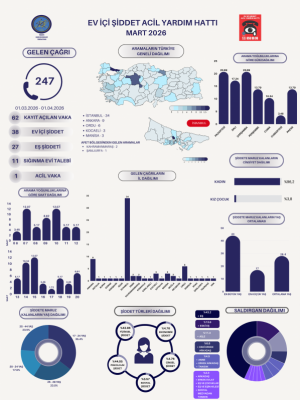
Ev İçi Şiddet Acil Yardım Hattı Mart 2026 Veri ve Analiz Raporu
Detail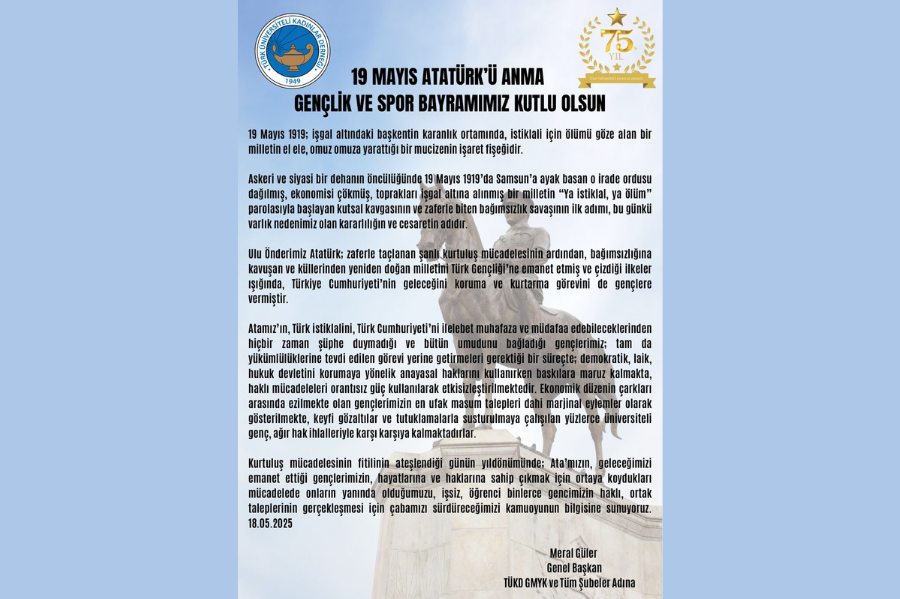
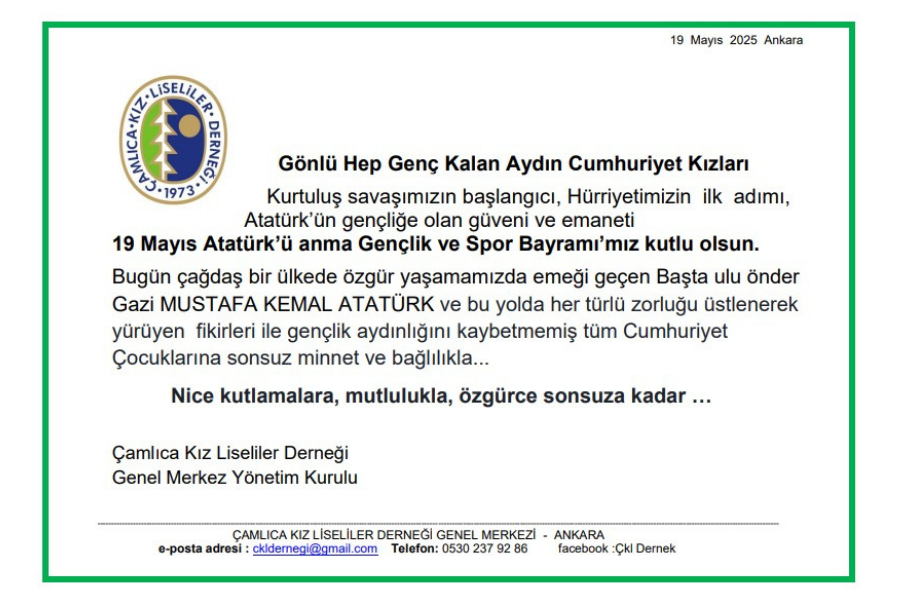
Üye derneklerimizden Çamlıca Kız Liseliler Derneği 19 Mayıs Mesajı
Detail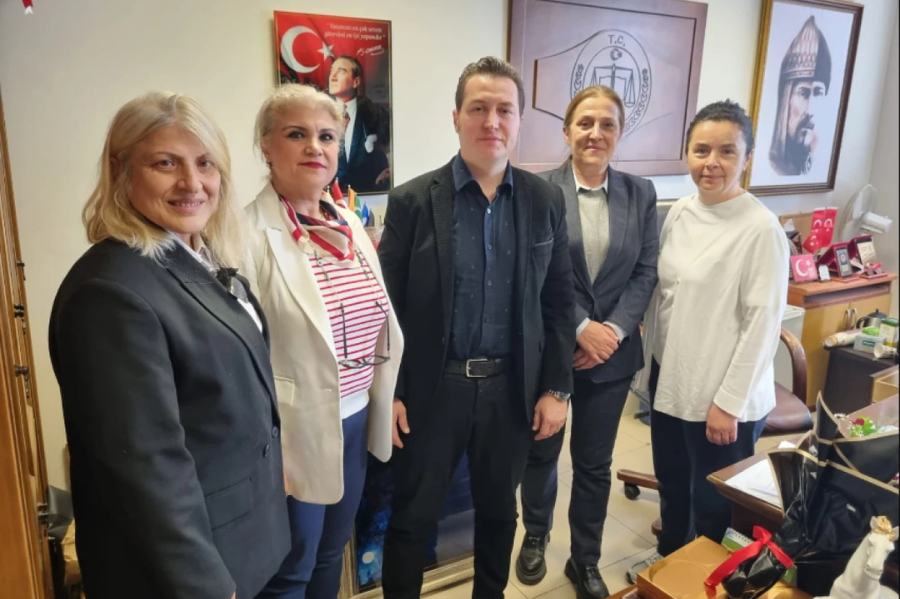
Türkiye'nin en çok üyesi bulunan Kadın Dernekleri temsilcileri Savcı Yavuz Engin'i ziyaret etti.
Detail
Üye derneklerimizden İVKAD'ın Grand Kartal Otel Yangınına İlişkin Basın Açıklaması
Detail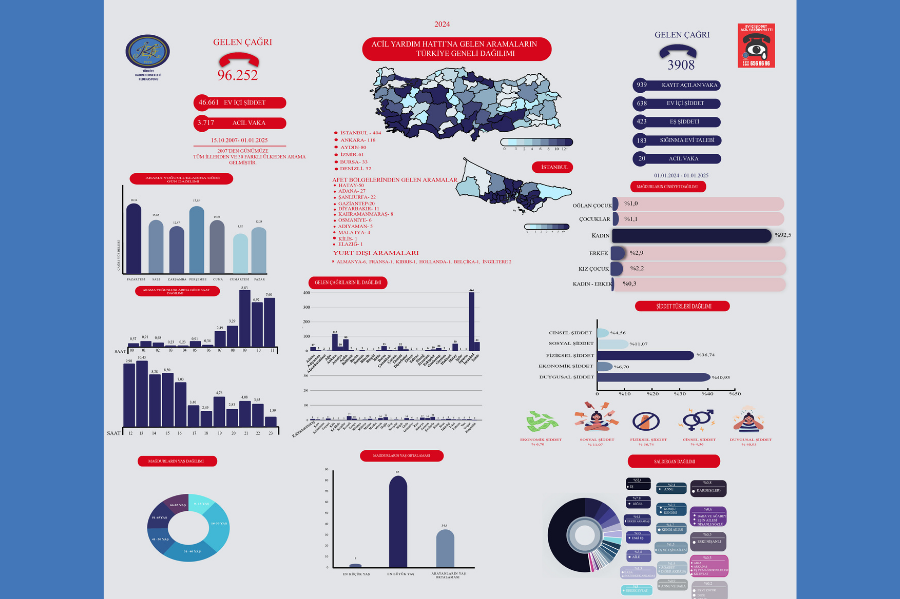
Ev İçi Şiddet Acil Yardım Hattı 2024 Yıllık Veri ve Analiz Raporu
Detail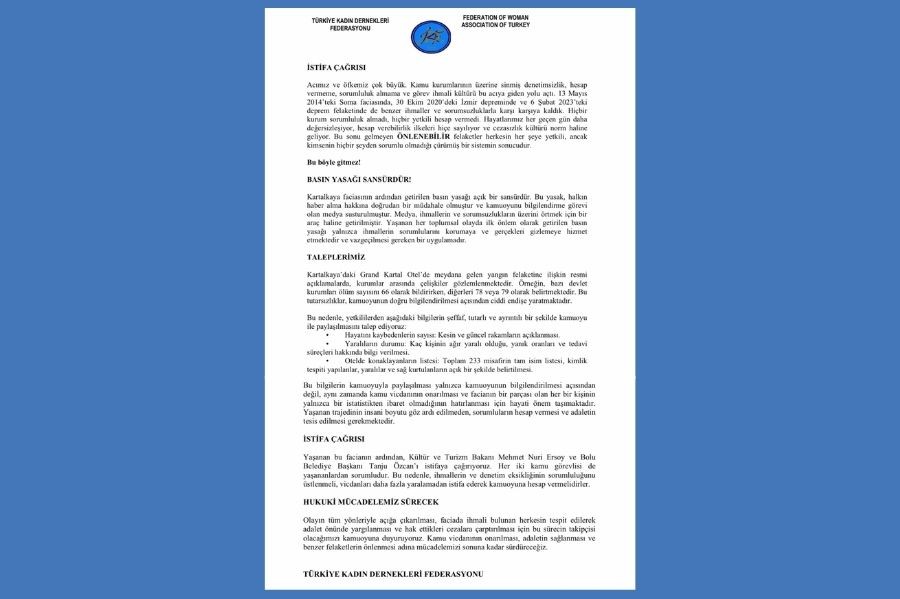

Number of Callers
91.209

Number of Applicants Regarding Domestic Violence
45.868

Number of Emergency Cases
3.688

Average Age of Victims
8-83